Real case
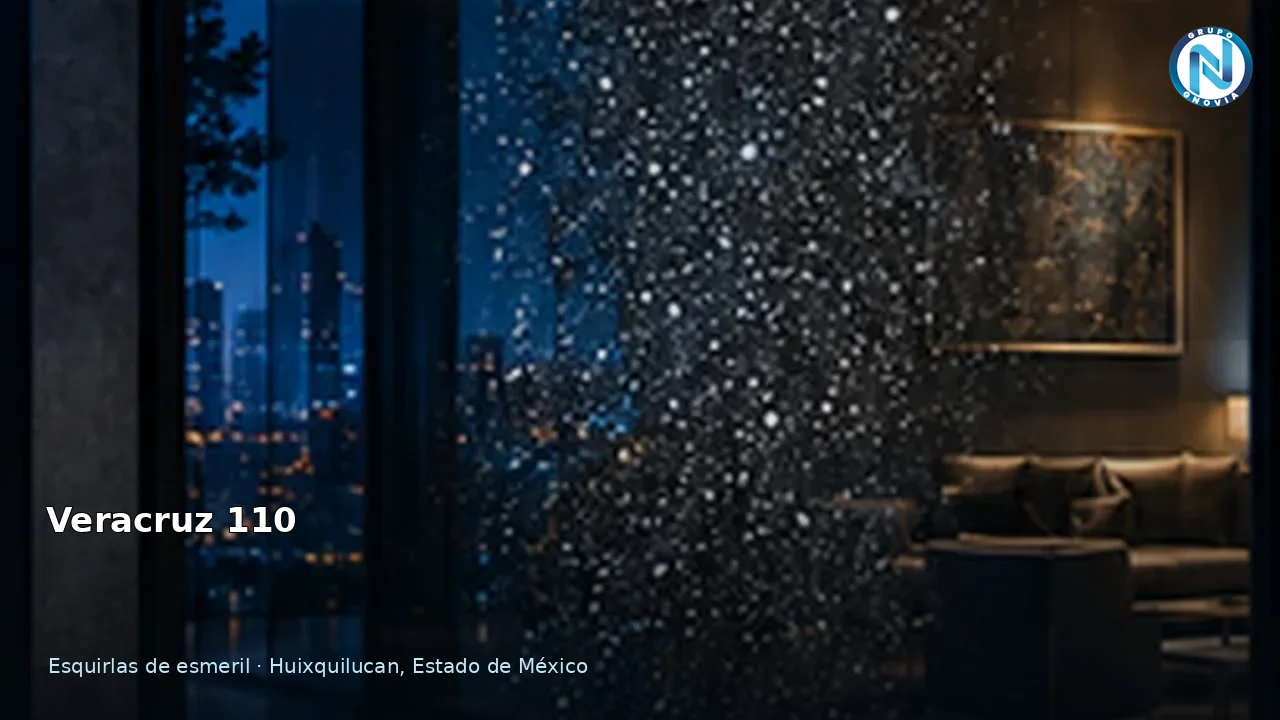
Veracruz 110
Documented restoration of 3+3 mm laminated glass with annealed plies affected by grinding particles.
View evidence →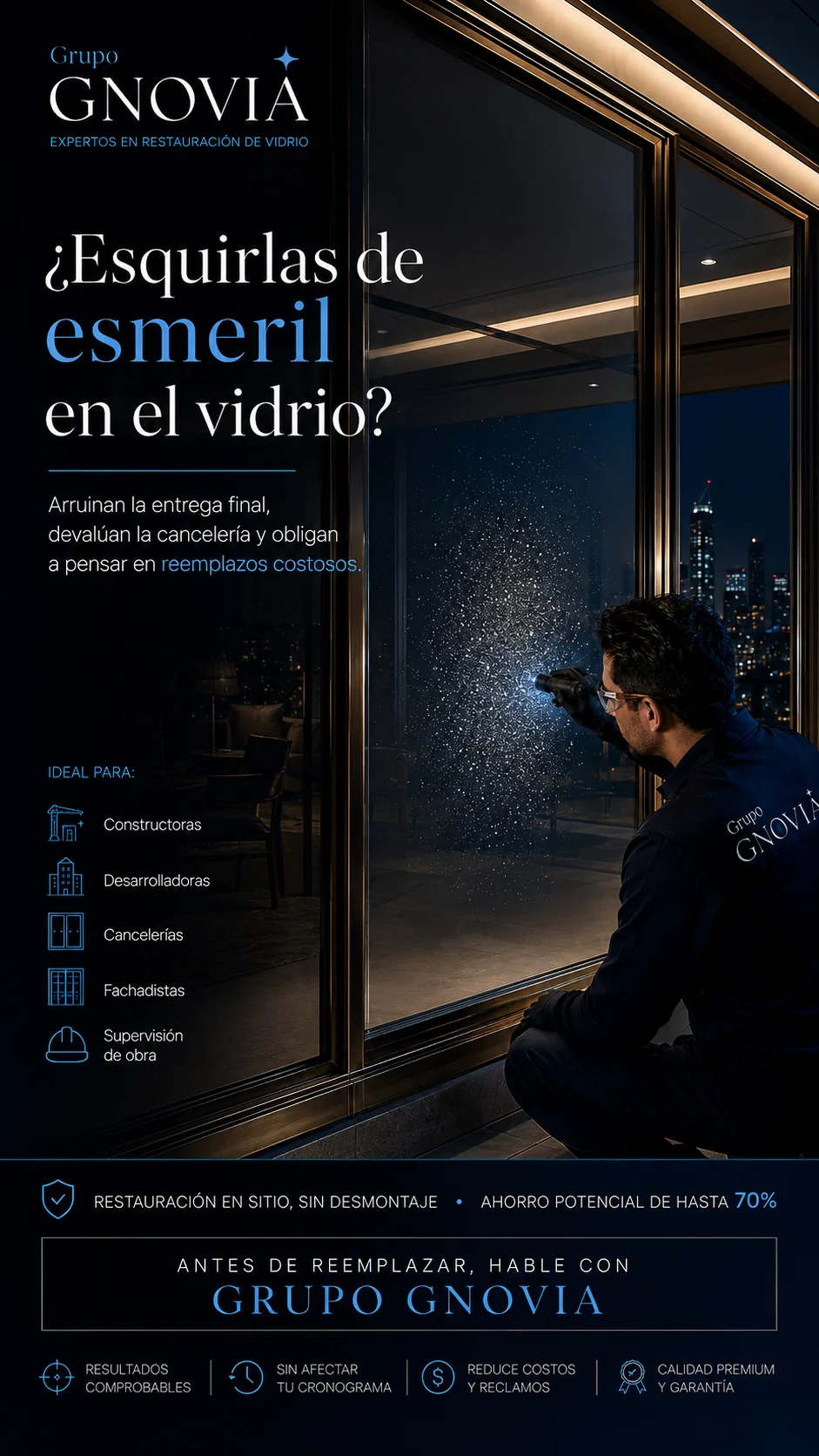
Recover glass with pits, embedded particles and craters caused by grinders or grinding. Specialized restoration for construction sites.
Grinding sparks strike glass at high speed, leaving embedded points, a rough texture and craters. We restore glass damaged by grinders without confusing it with welding damage, hard-water scale or dirt.
Replacing panes because of grinding damage requires coordinating façades, seals and access. Restoration works on each affected area and helps maintain the construction sequence with fewer disruptive operations.
For grinding-spark damage, there is usually an approximate limitation of 7 to 10 cm from certain edges. The assessment distinguishes this damage from welding damage, hard-water scale or removable contamination.
We do not work on broken, cracked, fractured glass or damage that structurally compromises the glass.
Construction, façades, glazing systems, supervision and after-sales service.
Grinding projects abrasive particles at high speed. Unlike welding, it can create a broad field of impact points, rough texture and localized haze.
Documented restoration of 3+3 mm laminated glass with annealed plies affected by grinding particles.
View evidence →
Audiovisual case of restoration on 6 mm annealed glass affected by grinding sparks.
View evidence →
Documented case of scratched tempered-glass restoration in a hotel environment with high visual standards.
View evidence →Grupo GNOVIA has documented experience restoring tempered, laminated, annealed and insulated glass in different thicknesses and access conditions. Each pane is evaluated according to its configuration, location, damage depth and proximity to the edges.
Polishing glass damaged by grinding sparks corrects pits and irregular texture through a controlled technical intervention on the installed glass.
Grinding-spark damage normally has an approximate limitation of 7 to 10 cm from certain edges, depending on the system, glass type and access.
Yes. We work with the glass installed as long as it remains intact and safe access is available, avoiding removal and reducing disruption to your space.
We restore tempered glass with superficial or deep damage as long as the glass is not broken, cracked, fractured or structurally compromised.
The specialized process recovers the surface in a controlled manner without distorting the glass or altering its function. Before starting, we confirm the scope using the case’s technical information.
Yes. We restore deep damage when the glass remains intact; depth determines the work sequence and time, but by itself does not require replacement.
It depends on the type and depth damage, area, number of panes, access, height, location, sector and volume.
We do not work on broken, cracked, fractured glass or damage that structurally compromises the glass.
For grinding-spark damage, there is usually an approximate limitation of 7 to 10 cm from certain edges. The assessment distinguishes this damage from welding damage, hard-water scale or removable contamination.
Construction, façades, glazing systems, supervision and after-sales service.
This is very uncommon because Grupo GNOVIA personnel are trained to restore glass and work with a controlled sequence. In exceptional cases, previously damaged glass might not withstand the intervention. If that occurs, we do not charge for the service performed on that pane; however, we do not assume the replacement cost glass that was already damaged before work began. This condition is explained clearly before the work starts.
Not in most cases. We confirm the service remotely using the damage description, measurements, glass type, location and access. On-site visits are mainly reserved for construction projects or projects with a large volume glass.
Play the evidence without leaving the website. The official YouTube player activates only when the thumbnail is clicked.
Summary: the video shows the damage, preparation, intervention on installed glass and visual review of the result.
Continue with assessment Continue on WhatsApp