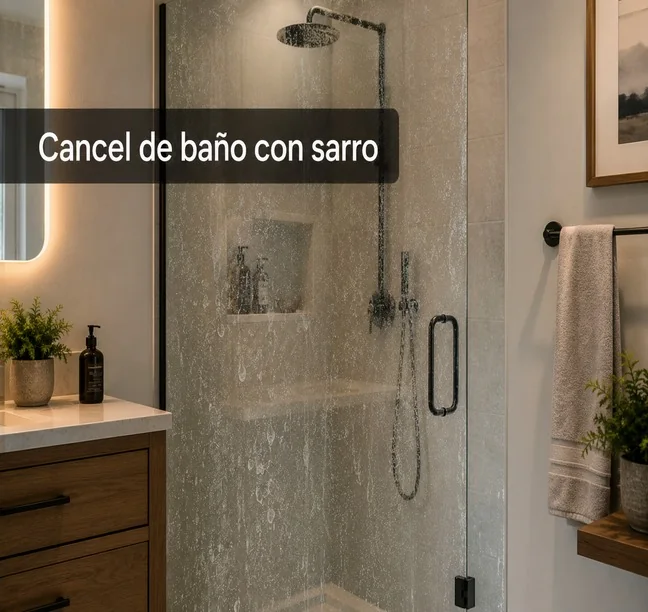
Glass with hard-water scale: recover transparency and a well-maintained appearance
Recover glass enclosures, windows and surfaces clouded by calcium, minerals, soap or moisture. Service for hospitality and residential applications.
Polishing glass stained by hard-water scale is used when deposits have already altered the surface and conventional cleaning not longer restores transparency.
When calcium, soap and minerals have already clouded the surface, additional cleaning does not restore transparency. We restore glass enclosures, windows and other glass to recover clarity and a clean appearance.
How does this damage occur?
- Calcium and magnesium present in water
- Soap, cleaning residue, and constant moisture
- Repeated evaporation on glass enclosures and windows
- Use of unsuitable chemicals or fibers
Visible and operational consequences
- Leaves a whitish, cloudy or aged appearance
- Makes the bathroom or room appear poorly maintained
- Creates recurring complaints even after cleaning
- Reduces the perceived quality of properties and hotels
Restore before replacing
Replacing glass enclosures or windows because of hard-water scale is disproportionate when the system and glass remain intact. Restoring the affected face preserves hardware and reduces disruption in bathrooms, rooms and residences.
Technical scope and limitations
We distinguish removable deposits from surface alterations. Household chemicals do not always correct the damage and can make it worse; an evaluation is advisable before continuing.
We do not work on broken, cracked, fractured glass or damage that structurally compromises the glass.
Where does it usually occur?
Hospitality and residential applications, including glass enclosures, spas, pools, windows and railings.
Frequently asked questions
Is the work performed with the glass installed?
Yes. We work with the glass installed as long as it remains intact and safe access is available, avoiding removal and reducing disruption to your space.
Can tempered glass be restored?
We restore tempered glass with superficial or deep damage as long as the glass is not broken, cracked, fractured or structurally compromised.
Does the glass become distorted or weakened?
The specialized process recovers the surface in a controlled manner without distorting the glass or altering its function. Before starting, we confirm the scope using the case’s technical information.
Can deep damage be restored?
Yes. We restore deep damage when the glass remains intact; depth determines the work sequence and time, but by itself does not require replacement.
How is the price determined?
It depends on the type and depth damage, area, number of panes, access, height, location, sector and volume.
When is restoration not possible?
We do not work on broken, cracked, fractured glass or damage that structurally compromises the glass.
What happens near the edges?
We distinguish removable deposits from surface alterations. Household chemicals do not always correct the damage and can make it worse; an evaluation is advisable before continuing.
In which sectors does it occur most frequently?
Hospitality and residential applications, including glass enclosures, spas, pools, windows and railings.
What happens if a pane cannot withstand the process?
This is very uncommon because Grupo GNOVIA personnel are trained to restore glass and work with a controlled sequence. In exceptional cases, previously damaged glass might not withstand the intervention. If that occurs, we do not charge for the service performed on that pane; however, we do not assume the replacement cost glass that was already damaged before work began. This condition is explained clearly before the work starts.
Do you need an on-site visit to confirm the service?
Not in most cases. We confirm the service remotely using the damage description, measurements, glass type, location and access. On-site visits are mainly reserved for construction projects or projects with a large volume glass.