Recover your shower enclosure damaged by welding
We restore welding pitting and craters on shower enclosures damaged during remodeling, without immediately replacing the glass.
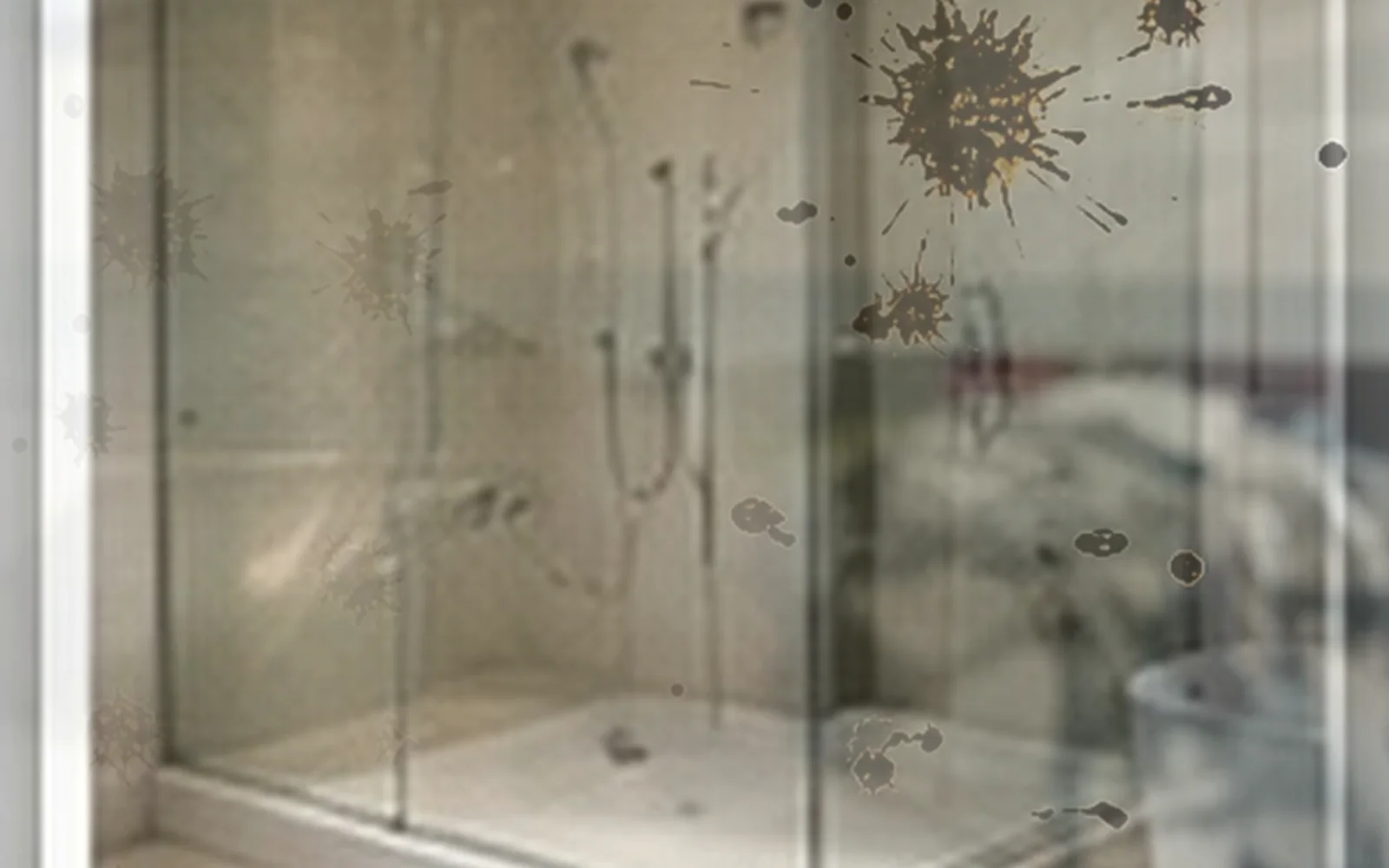
A remodeling project can leave a shower enclosure covered with metal dots and small craters. These are not stains; they are impacts from molten particles that physically altered the glass.
What is happening to your glass
Metalwork, accessory installation, or welding near the bathroom can project hot metal onto the shower enclosure. The particles adhere, embed, or leave pitting visible against the light.
Why it affects appearance so much
New glass can look old from the first day, and the bathroom loses the expected finish. Scrubbing the dots does not remove them and can add scratches around the damage.
What leaving it or replacing it implies
Replacing the panel requires reproducing hole patterns, dimensions, and tempering. It also involves removing hardware and resealing a space that is already finished.
How we restore this pane
- Pitting correction and craters welding
- Intervention on the interior face when the damage is concentrated there
- Preservation of dimensions, hinges, and holes
- Alternative to fabricating a new tempered-glass panel
Process specific to this case
- We identify the impacted face and the density of the particles.
- We protect fixtures, frames, stone, and seals.
- We remove metallic contamination and restore each affected area.
- We verify transparency and reflection under bathroom lighting.
Deep damage and work limitations
For welding damage, an approximate technical working distance of 7 to 10 cm is normally maintained from certain edges. We restore deep damage while the glass remains intact; broken or chipped glass is excluded.
Grupo GNOVIA restores superficial and deep damage when the glass remains intact. Most cases are confirmed using technical information; on-site visits are mainly reserved for large volumes.
Frequently asked questions about this case
Are welding dots stains?
No. They are physical impacts from molten metal that can leave adhered particles, pitting, or craters.
Can deep craters be restored?
Yes, while the glass remains intact. Depth determines the number of stages and the work time.
Can you work near hinges?
An approximate technical working distance of 7 to 10 cm is respected from certain edges and hardware.
Is the exterior face included?
Only if it also has damage and is expressly included in the scope; standard work focuses on the affected face.
What happens if a pane cannot withstand the process?
This is very uncommon because Grupo GNOVIA personnel are trained to restore glass using a controlled sequence. In exceptional cases, previously damaged glass may not withstand the intervention. If that occurs, we do not charge for the service performed on that pane; however, we do not assume the replacement cost of glass that was already damaged before work began. This condition is explained clearly before the work starts.
What annealed-glass thickness do you recommend?
We do not recommend restoring 6 mm annealed glass because its lower strength makes it less likely to withstand the process. Annealed glass 9 mm or thicker has a greater probability of withstanding the intervention; even so, service is performed only under the client’s responsibility and with prior acceptance of this condition. Broken, chipped, or fractured glass is not treated.
Do you need an on-site visit to confirm the service?
Not in most cases. We can confirm service remotely using the damage description, dimensions, glass type, location, and access conditions. On-site visits are primarily reserved for construction projects or projects involving a large volume of glass.