Correct cement residue before it becomes permanent scratching
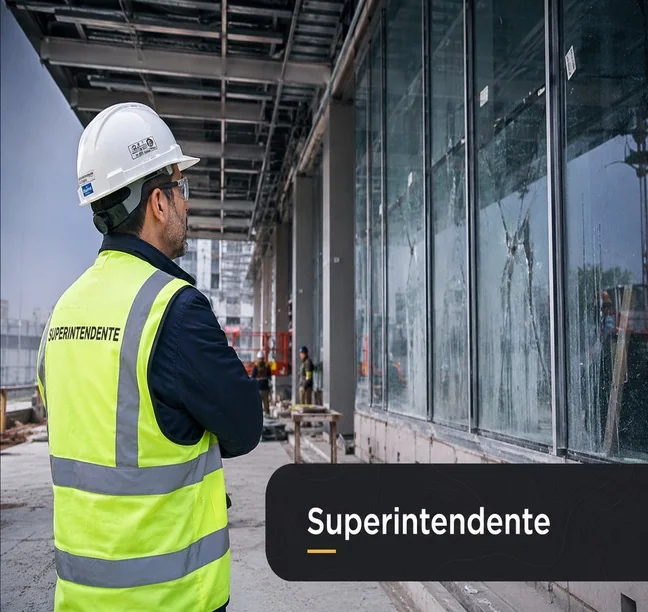
Service for superintendents dealing with glass affected by cement, mortar, or grout during cleaning and level closeout.
During daily inspection, hardened splashes, shadows, or marks may appear after cement has been removed with uncontrolled tools.
Immediate impact
The work front cannot be released, and there is a risk of worsening the glass by scraping it, especially near frames and edges.
What can happen if it is ignored
Late correction accumulates open items by level and makes it difficult to determine which contractor caused or worsened the damage.
Technical cause of the damage
Alkaline runoff, grout, and mortar can adhere to or react with the glass. The priority on site is to distinguish removable residue from surface alteration before a crew scrapes it and makes the damage worse.
Common alternatives and hidden costs
Uncontrolled scraping with blades creates scratches; leaving the open item unresolved blocks area release; replacement forces work fronts to be reopened. Restoration allows panes to be scheduled by level while preserving evidence of progress.
Benefits of evaluating restoration
- Differentiation between adhered material and surface alteration
- Work sequence compatible with level-by-level handover
- Control of access requirements and protection of completed areas
- Prevention of scratches caused by improvised cleaning
Service process
- We survey areas by level, define protection for frames and finishes, coordinate access requirements with the construction work front, restore in batches, and release each reviewed area so observations can be closed.
Scope and limitations
First, we determine whether there is removable adhered material or a surface alteration that requires restoration. Scraping without a diagnosis is not recommended.
We do not work on broken, cracked, fractured or structurally damaged glass. We restore deep damage when the glass is not broken or cracked. Depth changes the work time and sequence, but it does not rule out recovery.
Review my case Change profile or selection
Frequently asked questions
Is the work performed with the glass installed?
Yes. We work with the glass installed as long as it remains intact and safe access is available, avoiding removal and reducing disruption to your space.
Can tempered glass be restored?
We restore tempered glass with superficial or deep damage as long as the glass is not broken, cracked, fractured or structurally compromised.
Does the glass become distorted or weakened?
The specialized process recovers the surface in a controlled manner without distorting the glass or altering its function. Before starting, we confirm the scope using the case’s technical information.
Can deep damage be restored?
Yes. We restore deep damage when the glass remains intact; depth determines the work sequence and time, but by itself does not require replacement.
How is the price determined?
It depends on the type and depth damage, area, number of panes, access, height, location, sector and volume.
When is restoration not possible?
We do not work on broken, cracked, fractured glass or damage that structurally compromises the glass.
What information do you need for an evaluation?
Damage type, location, quantity or area, access conditions and case-specific information. We do not request photographs in the first contact.
Is it worth evaluating before replacement?
Yes. Technical confirmation makes it possible to compare scope, timing, operational risks and direct and indirect costs against replacement.
What happens if a pane cannot withstand the process?
This is very uncommon because Grupo GNOVIA personnel are trained to restore glass using a controlled sequence. In exceptional cases, previously damaged glass may not withstand the intervention. If that occurs, we do not charge for the service performed on that pane; however, we do not assume the replacement cost of glass that was already damaged before work began. This condition is explained clearly before the work starts.
Do you need an on-site visit to confirm the service?
Not in most cases. We can confirm service remotely using the damage description, dimensions, glass type, location, and access conditions. On-site visits are primarily reserved for construction projects or projects involving a large volume of glass.